Air-conditioning is often part of a renovation, and in an HDB flat it comes with its own set of rules: who may install it, where the condenser and pipes may go, how much the wall can carry, and what has to be filed afterwards. This guide covers HDB’s rules. Condo owners should check their MCST’s by-laws, which aren’t law and vary by estate.
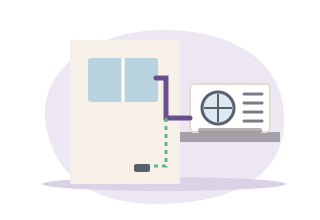
The general conditions
HDB makes you responsible for the proper installation, safety and stability of your air-conditioner, whether casement, window or split type. It must be:
- installed by a BCA trained air-conditioning condensing unit installer;
- put in the approved location, using the approved method, which you can check with the HDB branch managing your flat;
- followed by an installation report to that HDB branch within 14 days of installation;
- for any new wiring, tested by SP Services, using Form CS/5H endorsed by HDB.
The air-conditioner ledge is for the condensing unit only.
Where the unit and pipes can go
From HDB’s technical requirements:
- All piping runs inside the flat. Pipe joints must be insulated so they don’t drip.
- Condensed water drains to a floor trap in your flat.
- No condensing units along the common corridor.
- No hacking of holes through reinforced concrete in the flat, and no aircon pipes embedded in concrete slabs, columns or beams.
- On a pre-cast façade with tiles, one 50mm × 50mm opening per panel is allowed for the refrigerant pipe. The installer must check the surrounding tiles, and any delaminated tiles have to be removed.
- Rubber padding under the condensing unit, and no vibration in the building.
- If a unit goes in a living room with a gas pipe running through, a licensed gas service technician must first check that the gas pipes comply with the Code of Practice CP 51.
How much power and weight: 30 amps or 40 amps
What you can install depends on your flat’s electrical loading. HDB says blocks completed on or after 1 January 1994, and blocks upgraded under the Main Upgrading Programme or HIP, have the higher loading of a 40-amp main switch. If you’re unsure, HDB lets you check your block’s loading.
Flats with a 40-amp main switch (including MUP and HIP flats) need no permit. HDB’s guidelines still apply:
- the running current is restricted by a 20-amp double-pole isolator or a 15-amp power point;
- a maximum of 2 split-type condensing units;
- at most 110kg per wall panel, whether on the external wall or the ledge;
- only one wall-mounted condensing unit per wall panel.
Flats with a 30-amp main switch need an electrical permit if the air-conditioner uses a new 15-amp power point or a new 20-amp isolator, but not if it uses an existing approved one. HDB also limits the total running current and weight:
| Flat type | Maximum total running current | Maximum condensing unit weight |
|---|---|---|
| 1 or 2-room | 5.00 amps | 80kg |
| 3, 4, 5-room, Executive Maisonette, Multi-Generation | 8.50 amps | 80kg |
| Executive Apartment (4 bedrooms) | 8.50 amps | 80kg |
| Executive Apartment (5 bedrooms, converted block) | 11.00 amps | 80kg |
Before installing, you and your installer must check that the total running current of your units doesn’t exceed the approved rating.
In the renovation schedule
- Plan the pipe routes before the carpentry. Pipes run inside the flat and can’t be buried in concrete, so trunking or false ceilings and built-ins have to leave room for them.
- Put it in the contract. If your contractor arranges the aircon, write in the BCA trained installer, the approved locations and the installation report. See what your renovation contract should say.
- New points need a licensed electrician. Electrical works in a renovation go through a licensed electrical worker; see licensed trades.
After the works
HDB makes you keep the external wall free of stains at your own expense, and maintain the unit so it doesn’t cause a nuisance to neighbours; if it does, HDB can ask you to stop using or remove it. The Town Council also asks owners to give HDB, the Town Council and other authorities access to check the ledge when needed. For regular servicing, AirconToCool, a sister site run by the same team, passes servicing and repair enquiries to a partner aircon firm.
Questions people ask
Do I need an HDB permit to install an air-conditioner?
Not if your flat has the higher electrical loading of a 40-amp main switch, which blocks completed on or after 1 January 1994, or upgraded under MUP or HIP, have. Flats with a 30-amp main switch need an electrical permit for a new 15-amp power point or 20-amp isolator, but not when using an existing approved one.
Can the aircon condenser go on the corridor side of my flat?
No. HDB doesn’t allow air-conditioning condensing units of any type along the common corridor.
Can I put other things on the aircon ledge?
No. HDB says the ledge is strictly for the condensing unit. The Town Council also requires it to be kept clean and free of obstruction, and not tampered with.
Who files the paperwork after installation?
An installation report goes to the HDB branch managing your flat within 14 days after installation. Any new wiring needs SP Services’ Form CS/5H, endorsed by HDB, for testing.
Sources
Renovation rules change. We checked this guide against these official pages on 10 November 2026. If a source says something different from this guide, the source is right, and your HDB branch, condo management or BCA has the final word on your own home.
SpaceToReno is run by the OurKampung team. Where a guide links to a sister site, or to Junk to Clear, a renovation and disposal company we refer jobs to, it’s because that step calls for the service, and the sentence says so. Enquiries sent through the form go to the OurKampung team, who pass them to the partner who’ll quote for the job. How SpaceToReno works