A household shelter is a room with reinforced concrete walls and a steel door, built to protect the family in an emergency. If your flat or condo unit has one, it’s probably a storeroom or a study day to day. In a renovation, it’s the room with the strictest rules, set by SCDF and applied by HDB.
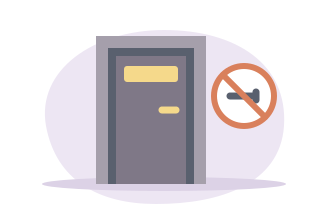
Not allowed
From SCDF’s list of works not permitted in a household shelter, which HDB repeats in its renovation guidelines:
- hacking or drilling the shelter’s walls, floor slab or ceiling slab, other than the shallow drilling allowed below;
- modifying, changing, removing or tampering with the shelter door, or removing or covering the door notice;
- wall tiles, rock-stone or cement-sand finishes, or plaster on the inside of the shelter walls;
- hacking the inside or outside of the shelter walls to make a key for tiling;
- laying floor tiles with adhesive, or a second layer of tiles over the existing ones;
- cornices, and power-driven nails into the internal walls;
- altering the ventilation openings, their plates, or the bolts and nuts that hold them.
Allowed
- Drilling up to 50mm into the internal walls and ceiling to fix inserts and removable screws. Fixtures must be removed within 48 hours when the owner is notified.
- Floor tiles bonded to wet cement mortar, with floor finishes and screed no more than 50mm thick in total.
- Skirting tiles up to 100mm high.
- Painting, but not over the door notice, the locking bolts or the door seal.
- Removable covers over the vent openings, leaving at least a quarter of each opening uncovered.
HDB adds that fixtures which can’t be removed easily in an emergency shouldn’t be placed or installed in the shelter.
Telling your contractor
The shelter is easy to damage by accident during hacking next door. Before works start, point it out to your contractor, and put the shelter rules in the scope: no hacking, no wall tiles, no built-in carpentry that can’t come out quickly. See what your renovation contract should say.
Questions people ask
Can I hack the household shelter wall to make the room bigger?
No. SCDF doesn’t allow hacking or drilling of the shelter’s walls, floor slab or ceiling slab, apart from shallow drilling for removable fixings. The reinforced walls, floor, ceiling and steel door must not be tampered with.
Can I build a wardrobe or shelves in the household shelter?
You can drill up to 50mm into the internal walls and ceiling to fix inserts and removable screws, but anything fixed must be removed within 48 hours when the authorities say so. HDB adds that fixtures which can’t be removed easily in an emergency shouldn’t be placed in the shelter.
Can I change the shelter door?
No. Modifying, changing, removing or tampering with the household shelter door isn’t allowed, and the door notice mustn’t be removed or covered, even when painting.
Sources
Renovation rules change. We checked this guide against these official pages on 5 October 2026. If a source says something different from this guide, the source is right, and your HDB branch, condo management or BCA has the final word on your own home.
SpaceToReno is run by the team behind Junk to Clear, which also handles renovations. Where a guide links to Junk to Clear or a sister site, it’s because that step calls for the service, and the sentence says so. Enquiries sent through the form go to the same team. How SpaceToReno works